
Get All CineFlow AI OTO Links, Your search ends here. Below, you will find the direct links to every CineFlow AI OTO (Upsells 1 through 8). I have curated this list to ensure you get the Front-End access plus all four premium OTO Editions without navigating through complicated funnels.
Why use these links?
Massive Savings: Automatically apply the hottest discount coupon codes available.
Exclusive Rewards: Unlock my custom bonus bundle, valued at over $40,000, just for using these links.
Full Transparency: Read my detailed CineFlow AI Review to understand exactly what each upgrade offers.
These links take you straight to the direct sales pages. Don’t miss this chance to secure your upgrade copies at the lowest price possible. This is a limited-time offer!
CineFlow AI OTO Links Below + Coupon + Huge Bonuses

==>>Use this coupon for 30% Off “‘ CINEFLOW30 ’”
>> Front-End <<
>> OTO1 UNLIMITED Edition <<
>> OTO2 DFY Edition <<
>> OTO3 TRAFFIC Edition <<
>> OTO4 AGENCY Edition <<
>> OTO5 FRANCHISEE Edition <<
>> OTO6 WHITELABEL Edition <<

Your Hot Bonuses Packages ” Value $40k “
>> Reseller Bonuses Packages 1<<
>> Hot Bonuses Package 2<<
>> Hot Bonuses Package 3 <<
What “CineFlow AI OTO” actually means (and why it messes with your head)
“OTO” is short for One-Time Offer. In plain English: extra upgrades you’re offered right after you buy (or try to buy) the main product. Some are useful. Some are basically “pay more to make it easier.” Some are… not for normal people.
The tricky part? The funnel moves fast. You click “Next,” and suddenly you’re staring at a bigger plan, a “DFY” plan, an “Agency” plan, and something called “Whitelabel” that sounds like a tech bro’s dream.
So here’s what we’re doing in this post:
- Break down the CineFlow AI OTO funnel into 5 steps (including the front-end).
- Give pros and cons for each step.
- Compare OTO 1 vs all OTOs (because that’s the one most people should understand first).
- Pick the best OTO depending on what you’re actually trying to do.
- Talk pricing stacks, what “using it” feels like, and where it fits vs other tools.
No drama. No pretending everyone needs the “max turbo unlimited diamond agency” version. Most don’t.
CineFlow AI OTO quick snapshot (read this before you overthink it)
If you only buy one upgrade: it’s usually OTO 1 (Unlimited). That’s the one that tends to remove the annoying limits people bump into.
If you want clients + selling services: look at OTO 4 (Agency).
If you want “they do it for me”: that’s OTO 2 (DFY) (but you’ll pay for convenience).
If you’re chasing traffic: OTO 3 (Traffic) is the gamble. Sometimes it’s useful. Sometimes it’s hype. You decide with your eyes open.
Now let’s map the whole thing in one place.
CineFlow AI OTO funnel map: the 10-step flow
This table is meant to stop the scrolling panic. Read it once, then go step-by-step below.
| Step | Offer Name | What it’s “for” | Price Range | My blunt take |
|---|---|---|---|---|
| 1 | Front-End (Main CineFlow AI) | Core app + basic features | $17–$19 (launch-range) | Worth it if you actually plan to make videos, not just collect tools. |
| 2 | OTO 1: Unlimited Edition | Removes limits + expands features | $97–$297 | The upgrade most people mean when they say “is the OTO worth it?” |
| 3 | OTO 2: DFY Edition | Done-for-you setup/content style help | $97 | Buy time. Trade money for less work. |
| 4 | OTO 3: Traffic Edition | Traffic “solution” add-on | $47–$57 | Potentially useful. Also potentially fluffy. Depends on your skill level. |
| 5 | OTO 4: Agency Edition | Client accounts + agency dashboard | $97–$147 | Great if you sell services. Useless if you don’t. |
| 6 | OTO 5: Reseller Edition | Resell the funnel | $67–$97 | Only if you’re into selling products, not creating videos. |
| 7 | OTO 6: Whitelabel Edition | Brand it as yours + sell at your price | $297–$497 | High-ticket. Only makes sense if you have a plan to sell software. |
| 8 | “Downsell” Step (often shown if you skip) | Cheaper version of an OTO | Varies | Sometimes the best deal. Seriously. Read before rage-clicking “No.” |
| 9 | Bundle / Stack Deal (sometimes appears) | Discounted combo of upgrades | Varies | Only good if you already wanted multiple upgrades anyway. |
| 10 | Training / Implementation Add-on (sometimes appears) | Coaching, templates, “do it with you” help | Varies | Buy if you freeze when it’s time to publish. Skip if you execute fast. |
Important: Steps 8–10 can show differently depending on how the funnel is set up at the time (and what you click). That’s normal for these launches.
Step 1: Front-End CineFlow AI (the main product)
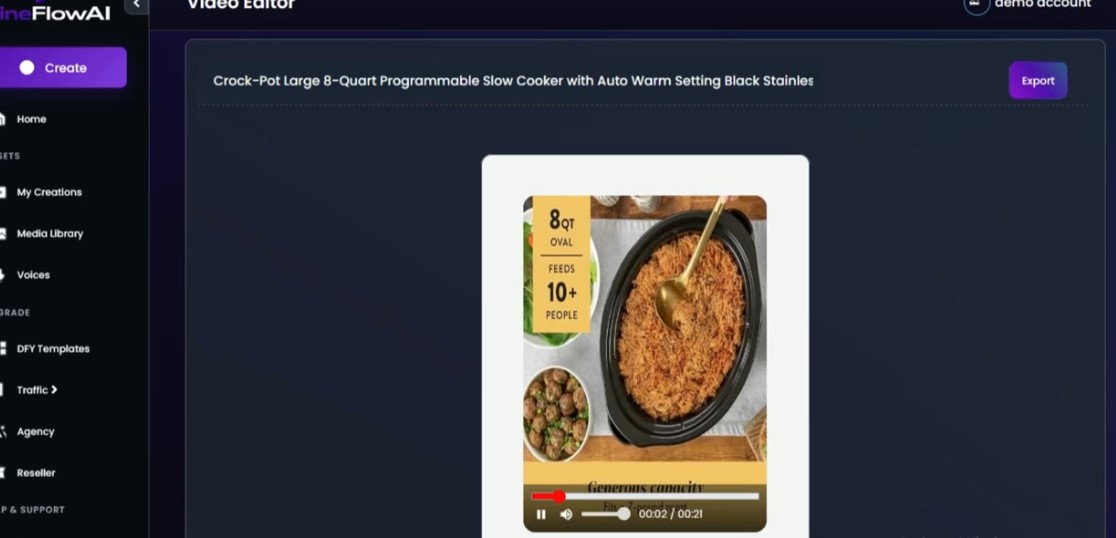
The front-end is the core platform. This is where you’ll get the main “make videos fast” workflow. If your goal is content for ads, socials, offers, or client work, the front-end is your entry point. Period.
Pros
- Low entry price (during launch windows).
- Good for testing whether CineFlow AI fits your workflow before spending more.
- Gets you in the door with the core features.
Cons
- Like most front-ends, it may feel “limited” once you start creating regularly.
- If you’re a heavy user (daily content), you may want the upgrade that removes the ceiling.
My take: Buy the front-end only if you’ll actually use it this week. Not “someday.” This week.
Step 2: CineFlow AI OTO 1 (Unlimited Edition) — the one everyone asks about
This is usually the main “power user” upgrade. It’s positioned to unlock more capacity, more flexibility, and the stuff that makes you feel like you bought the “real” version.
What you typically get
- Unlimited video recreation
- Advanced voice cloning
- Multi-language support
- Customizable templates + style variations
- In-app editing tools
- Stock media + sound effects library
- Branding options + custom thumbnail generation
Pros
- Removes friction for frequent creators (less “limit anxiety”).
- More features = more types of content you can output without duct tape workflows.
- Best ROI for most people who plan to use CineFlow AI beyond casual testing.
Cons
- Price range is higher than the front-end (obviously).
- If you only need a few videos per month, you might never use the “unlimited” side.
My take: If your plan is consistent content (ads, shorts, product videos, client batches), this is the upgrade I’d look at first. Not because it’s shiny. Because limits are annoying when you’re trying to ship.
Step 3: CineFlow AI OTO 2 (DFY Edition) — paying for speed
DFY (done-for-you) offers are basically: “We’ll help you skip setup, skip confusion, and get to output faster.” Sometimes it’s assets. Sometimes it’s prebuilt campaigns. Sometimes it’s guidance packaged as “we did the work.”
Pros
- Good for beginners who stall when they need to choose templates, scripts, or angles.
- Faster launch if you’re the type who never finishes the first project.
- Can be a shortcut if you’re selling services and need a starting library.
Cons
- DFY isn’t magic. You still need to publish.
- If you already have your own content strategy, DFY can feel generic.
- Sometimes DFY packages contain a lot of “filler.” (Not always. But it happens.)
My take: DFY is best for people who know they procrastinate. If you’re an executor, spend that money on tools or distribution instead.
Step 4: CineFlow AI OTO 3 (Traffic Edition) — the risky one
Traffic add-ons are a classic move in these funnels. The promise is simple: “Here’s buyers traffic.” The reality is… it depends. A lot.
Pros
- If it’s a legit traffic source and matches your niche, it can jump-start results.
- Helps people who have content but no distribution plan.
- Often cheaper than the big upgrades.
Cons
- Traffic quality varies. (That’s the whole issue.)
- Traffic without a strong offer = wasted clicks.
- Newbies often buy traffic too early instead of fixing the message.
My take: Only buy Traffic Edition if you already have (1) a landing page, (2) a clear offer, and (3) you can track results. If not, you’re basically buying noise.
Step 5: CineFlow AI OTO 4 (Agency Edition) — only for client work
Agency upgrades are built for one thing: selling services. If you have clients (or want them), an agency dashboard + multi-account setup can be worth it.
Pros
- Client account management in one place.
- Scale your output: multiple client projects, organized.
- Positions you to charge monthly retainers (if you actually sell).
Cons
- If you’re not doing client work, it’s overkill.
- You’ll still need a process for onboarding and delivery.
My take: Agency Edition is “yes” if you already sell services or have a plan to start this month. If your plan is “maybe later,” skip it. Later never comes.
Step 6: CineFlow AI OTO 5 (Reseller Edition) — business model shift
This is where the funnel stops being about making videos and becomes about selling the product itself. If you’re an affiliate or product marketer, reseller offers can be attractive.
Pros
- You can keep more (sometimes all) of the revenue on sales.
- Often comes with marketing materials (pages, graphics, etc.).
- Support/hosting is sometimes handled for you, which removes headaches.
Cons
- If you hate selling, this won’t suddenly make you love it.
- Your results depend on your traffic and ability to run promos.
- Not relevant if your goal is content creation, not product selling.
My take: Only buy Reseller if you already understand offers, funnels, email lists, or paid ads. Otherwise it’s like buying a restaurant because you like eating.
Step 7: CineFlow AI OTO 6 (Whitelabel Edition) — the expensive “make it mine” offer
Whitelabel is the heavy upgrade. It’s for people who want to rebrand the software as their own, sell it under their brand, and set their own price.
Pros
- Branding control (logo, domain, company name).
- Potentially high-margin if you can sell software.
- Good fit for agencies or creators with an audience who want a “platform” play.
Cons
- High cost. Like, real money.
- You need a plan to sell, support, and market (even if some setup is handled).
- If you don’t have distribution, whitelabel becomes a fancy unused asset.
My take: Whitelabel is not a “just in case” purchase. It’s a “I already sell software / I have an audience / I have a sales plan” purchase.
Step 8: The “Downsell” (what happens when you click “No”)
Here’s something people miss: the best deals sometimes show up after you decline. The funnel might offer a cheaper version of an upgrade (less features, less capacity, lower price). That’s a downsell.
Pros
- Lower cost entry into a feature set you wanted.
- Sometimes perfectly fine if you don’t need the “max” version.
Cons
- Can be confusing (“Wait… why is this suddenly cheaper?”)
- Might remove the exact feature you needed (read the bullets).
My take: If you’re on the fence, decline once and see what the downsell offers. Then decide. Calmly.
Step 9: Bundle / Stack Deal (sometimes offered near the end)
Some funnels throw in a “bundle” offer: buy multiple upgrades at a combined discount. This can be great or pointless, depending on whether you actually wanted more than one upgrade.
Pros
- Cheaper than buying upgrades one-by-one (if you truly need them).
- Creates a “complete setup” fast.
Cons
- Bundles tempt people into buying stuff they won’t use.
- If you only need one upgrade, a bundle is a trap.
My take: Only buy the bundle if you can name (right now) how you’ll use each included upgrade within 30 days.
Step 10: Training / Implementation Add-on (the “don’t mess it up” offer)
Training add-ons exist because a lot of people buy tools and then… do nothing. Training is meant to push you into action. Sometimes it’s good. Sometimes it’s just videos you never watch. You know your personality.
Pros
- Helps beginners get results faster.
- Can reduce “I don’t know what to do first” paralysis.
Cons
- If you never finish courses, don’t buy another course.
- Often overlaps with free info you could figure out by experimenting.
My take: If you freeze at execution time, training is worth it. If you’re action-biased, skip and publish.
OTO 1 vs all OTOs: where the “real value” usually sits
If you’re trying to make a clean buying decision, compare everything against one question:
“What will stop me from producing and publishing videos consistently?”
Why OTO 1 usually wins
- It tends to remove limits (the #1 reason people get frustrated fast).
- It expands features in a way that touches multiple workflows (voice, languages, templates, editing).
- It’s useful even if you never sell anything—because it improves output.
When other OTOs beat OTO 1
- You sell services: OTO 4 (Agency) can beat OTO 1 because clients = revenue.
- You don’t want to think: OTO 2 (DFY) can beat OTO 1 if you’re stuck without assets.
- You’re a product marketer: OTO 5 (Reseller) or OTO 6 (Whitelabel) could be your “business play.”
Simple rule: If you’re a creator, go Unlimited. If you’re a service provider, go Agency. If you’re a seller, consider Reseller/Whitelabel.
The best CineFlow AI OTO (based on your situation)
There isn’t one “best” for everyone. But there’s a best for most.
Best for most people
OTO 1 (Unlimited Edition) — because it upgrades the actual product experience and removes the ceiling.
Best for freelancers & agencies
OTO 4 (Agency Edition) — if you can land even one client, it pays for itself faster than random upgrades.
Best for “I want this done for me” buyers
OTO 2 (DFY Edition) — if you’re the type who buys tools and then stares at a blank dashboard. This reduces that pain.
Best for software sellers
OTO 6 (Whitelabel Edition) — only if you have distribution (audience, list, partnerships, or paid traffic skill).
CineFlow AI OTO pricing: realistic stacks (so you don’t overspend)
Instead of “buy everything,” here are sane stacks.
Stack A: Creator Starter (lowest spend)
- Front-End only
Who it’s for: you want to test CineFlow AI without committing. You’ll create a few videos and see if you like the workflow.
Stack B: Serious Creator (most common)
- Front-End + OTO 1 (Unlimited)
Who it’s for: you plan to create weekly (or daily) and don’t want limits slowing you down.
Stack C: Client Work (service provider)
- Front-End + OTO 4 (Agency)
- Optional: OTO 1 (Unlimited) if you’re producing in volume
Who it’s for: freelancers, agencies, local marketers. You care about delivery, not “collecting features.”
Stack D: Convenience Buyer
- Front-End + OTO 2 (DFY)
Who it’s for: people who want the fastest path to a “working setup” and hate starting from scratch.
Stack E: Business / Resell
- OTO 5 (Reseller) OR OTO 6 (Whitelabel)
Who it’s for: marketers who understand promotions and have a distribution plan.
User experience notes: what it feels like to go through the OTO funnel
Here’s the honest “human” part: funnels are designed to create urgency. Timers. Big claims. A lot of “only today.” That doesn’t automatically mean it’s bad. It means you need a rule for decision-making.
What I recommend doing while you’re in the funnel:
- Decide your identity first: creator, service provider, or seller.
- Pick your one upgrade cap: “I’ll buy at most one OTO” (unless you have a clear plan).
- Read the bullet list like a checklist: if you won’t use it in 30 days, it’s a “no.”
- Look for the downsell: if you like the idea but hate the price, decline once and see if a cheaper option appears.
Also: don’t underestimate the mental cost of owning too many upgrades. More features can equal more confusion. Especially if you’re new.
My recommendation after evaluating all CineFlow AI OTOs
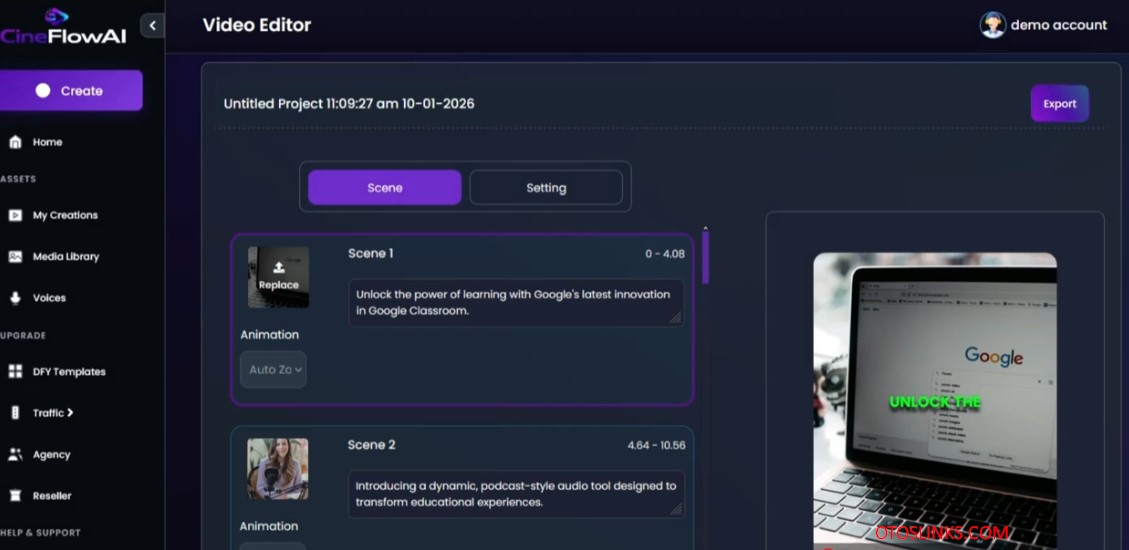
If you’re a normal creator (content, shorts, ads, promos): go Front-End + OTO 1. That’s the cleanest balance.
If you want to make money fast with client work: go OTO 4 (Agency) (and only add OTO 1 if you’re pumping out lots of videos).
If you’re the type who needs structure: consider OTO 2 (DFY). It’s basically buying momentum.
If your plan is resale/whitelabel: don’t buy it unless you can answer: “Who will I sell this to, and how will I reach them?” If you can’t answer that, pause. Seriously.
CineFlow AI OTO vs other tools (quick, honest comparison)
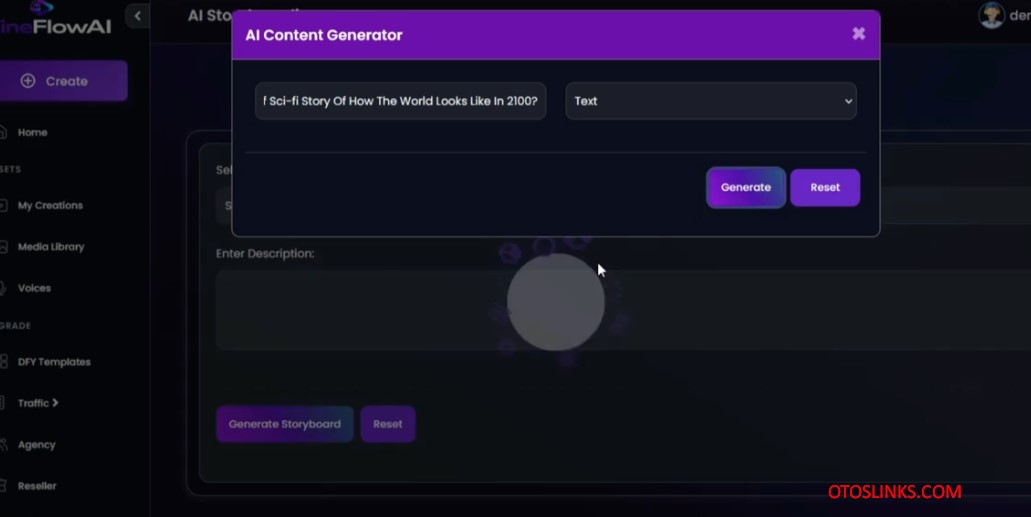
CineFlow AI sits in the “AI-assisted video creation” world. Depending on what you currently use, here’s how to think about it:
- CapCut / basic editors: Those are great when you already have footage and just need edits. CineFlow AI is more about generating and assembling faster.
- Canva video: Canva is design-first. CineFlow AI leans more “video-first” (especially if the features you want are templates + automation + voice workflows).
- InVideo / Pictory-type tools: Similar vibe: speed and templates. Your decision comes down to output quality and how annoying the limits feel (which is why Unlimited upgrades matter).
- Synthesia / avatar tools: If your focus is talking-head avatars, specialized tools can win. If you need variety (product promos, slideshows, text-to-video styles), CineFlow AI can be more flexible.
- Runway-style advanced generation: Those can be insanely powerful but also more “creative tool” than “marketing engine.” CineFlow AI is positioned more toward fast marketing assets.
If you want to see how other funnels structure “video tool OTO stacks,” here are two examples you can compare against:
(Those aren’t “better” by default. Just useful for understanding how these upgrade ladders usually work.)
Case studies: how CineFlow AI OTO choices play out (realistic scenarios)
These are scenario-style case studies to show the logic of choosing OTOs. Use them like a mirror: which one feels like you?
Case Study 1: The ecommerce owner (needs product videos weekly)
Goal: 3–5 product videos/week for ads and socials.
Best fit: Front-End + OTO 1 (Unlimited).
Why: Consistency is the game. Limits become friction. Unlimited removes that. The ecom owner doesn’t need agency dashboards. They need output and speed.
Case Study 2: The local marketer (wants clients)
Goal: Sell video promos to restaurants, gyms, salons.
Best fit: Front-End + OTO 4 (Agency) (optional: OTO 1 if production is heavy).
Why: Client management matters. The agency features help scale. Even one client can cover the cost if the marketer charges smart.
Case Study 3: The affiliate (wants to monetize the funnel)
Goal: Promote the product and earn from sales/upsells.
Best fit: Usually Reseller or Whitelabel only if the affiliate has a list and knows how to run launches.
Why: Reseller/whitelabel can increase margins, but only if you have distribution. Otherwise you’re buying a car without a road.
FAQ: CineFlow AI OTO (10 questions people actually ask)
1) Do I need every CineFlow AI OTO to get results?
No. Most people should pick one upgrade at most. Two if you have a clear business model (like client work + volume).
2) What’s the best CineFlow AI OTO for beginners?
If you’re creating consistently: OTO 1. If you freeze and need a starting structure: OTO 2 (DFY).
3) Is OTO 3 (Traffic) worth it?
Sometimes. But only if you already have an offer and tracking. If not, traffic is just random visitors doing nothing.
4) What if I skip an OTO and regret it?
In many funnels, you’ll see it again later or there’s a support route to upgrade later. Don’t assume “now or never” is always true.
5) Is OTO 4 (Agency) only for big agencies?
No, but it’s only for people who will actually serve clients. One-person agencies can benefit, but only if you’re selling.
6) Does whitelabel mean I can sell it as my own SaaS?
That’s the idea. But it only works if you can market and sell. The upgrade doesn’t magically create customers.
7) Which OTO is the “best value”?
Usually OTO 1, because it upgrades the product you actually use day-to-day.
8) Should I buy the bundle deal if it shows up?
Only if you were already planning to buy multiple upgrades. If you weren’t, it’s just a prettier way to overspend.
9) Can I make money with just the front-end?
Yes—if you publish. The tool is not the business. The business is distribution + offer + consistency.
10) What’s the “smart” buying path?
Front-end first. Create a few real videos. Then upgrade based on what actually blocks you: limits (OTO 1), clients (OTO 4), or speed/structure (OTO 2).
Final word (the calm decision)
If you’re here searching CineFlow AI oto, you’re already doing the right thing: pausing before spending.
My simplest recommendation:
- Creator? Front-End + OTO 1.
- Client work? Front-End + OTO 4 (and add OTO 1 only if needed).
- Need hand-holding? Front-End + OTO 2.
- Trying to resell software? Only consider OTO 5/6 if you have a plan and a channel.
That’s it. No panic clicking. No buying everything. Just the stuff you’ll actually use.
Table of Contents